Qiang Ethnic Group
Introduction
The Qiang ethnic group is one of China's oldest ethnic groups with a rich cultural heritage. They primarily inhabit the mountainous regions of Southwest China's Sichuan province, notably in the Aba Tibetan and Qiang autonomous prefecture. The population is relatively small, with around 300,000 people. The Qiang people have a distinct cultural identity that includes unique traditional practices, language, and customs. Despite being one of the smaller ethnic groups in China, their culture is well-preserved and vibrant, contributing significantly to the region's cultural diversity.
History
The history of the Qiang ethnic group is deeply rooted in the southwestern region of China. Historically, the Qiang people were known as a nomadic tribe that herded in the mountainous areas. Over centuries, they have evolved from a nomadic lifestyle to settled agricultural societies. The traditional villages, like Taoping Qiang village, have existed for over two millennia. Originally constructed for military defense, the village's watchtower has seen the flames of war extinguished over the ages and is now a tourist attraction. The Qiang people's history is marked by resilience, especially as they have rebuilt and flourished following significant challenges like the devastating 2008 Wenchuan earthquake, which severely impacted their communities and cultural heritage.
Language
The Qiang people have a written language, but it is not widely used. Oral tradition and cultural transmission through storytelling and song remain important for the Qiang group. The oral traditions are crucial for the preservation of their cultural heritage, as they play a vital role in maintaining the folklore, history, and knowledge of the Qiang people.
Culture
Traditional Clothing
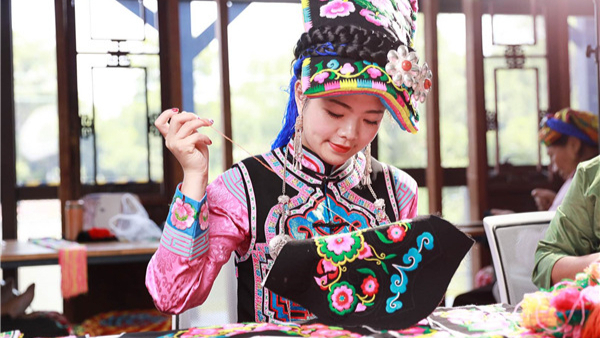
Traditional clothing of the Qiang ethnic group is characterized by vibrant colors and intricate designs. Qiang attire often features bright handcrafted cotton and silk works, including embroidery that is both ornamental and symbolic. The embroidery patterns, which are passed down through generations, hold cultural significance and incorporate motifs from nature and daily life. The artistry of Qiang embroidery is a testament to the group’s rich cultural traditions.
Festivals
Festivals play a significant role in the cultural life of the Qiang people. Various festivities are celebrated throughout the year, often involving traditional music, dance, and communal feasting. These festivals are not only a time for celebration but also serve as an opportunity to strengthen community bonds and pass on cultural traditions to younger generations.
Music and Dance
Music and dance are deeply embedded in the cultural fabric of the Qiang people. Their traditional music is often accompanied by unique instruments, such as bamboo pipes. Dance performances, which are integral to festivals and ceremonial occasions, reflect the rhythm of their daily lives and their connection to nature. Music and dance are critical means of cultural expression and preservation for the Qiang community.
Architecture
Qiang architecture is renowned for its unique style, prominently featuring watchtowers and stone houses. These structures are not only functional, serving as defense and residential buildings, but also symbolize the architectural ingenuity of the Qiang people. The watchtowers, in particular, are iconic and have become a significant aspect of their cultural landscape. Following the 2008 Wenchuan earthquake, efforts were made to restore and reconstruct these traditional architectural styles, preserving their historical and cultural value.
Economy
Traditionally, the Qiang economy was based on agriculture and herding. However, in recent years, tourism has become a significant economic driver, especially in villages like Taoping Qiang, which attract numerous visitors each year. The local economy has diversified with the cultivation of cherries and various fruits, alongside traditional crafts such as embroidery. The post-earthquake reconstruction brought new opportunities for Qiang people, enabling them to leverage their rich cultural heritage in economic activities like tourism and handicrafts.








